Flavor← the wheel
Grilled tuna
Meat, fish & cheese· seafood
What it is
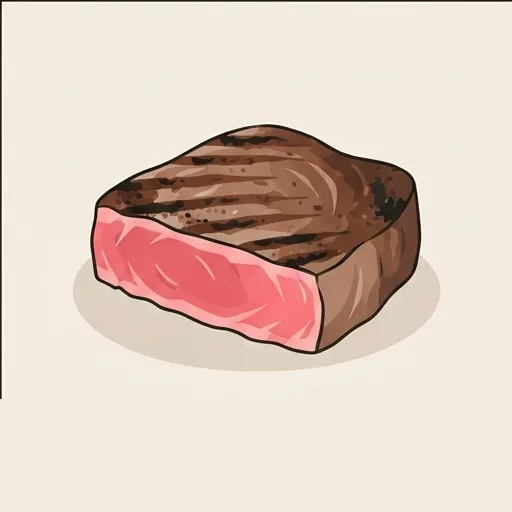
Grilled tuna is tuna cooked briefly and directly over an open flame or hot grate, often left rare in the center.
What it tastes like
On the nose: saline, citrus, fruity. Among its measured molecules: 2-Undecenal, (Z)-4-heptenal, 2-acetyl-1-pyrroline, trimethylamine, 2,4-nonadienal.
What goes with it
- Sparkling wineboth carry caprylic acidcite
- Beef tallowboth carry octanal, fruitycite
- Grapefruitboth carry decanal, citruscite
Salt and acid
Salt
Salt not measured yet.
Acid
Acid not measured yet.
Unusual pairings
Pairs the library can cite that almost nobody makes.
- Grilled tuna + Pandan
both carry decanal, citrus (58 of 341 carry it)
- Grilled tuna + Cilantro
both carry decanal, citrus (58 of 341 carry it)
- Grilled tuna + Coriander seed
both carry decanal, citrus (58 of 341 carry it)
Every one of its 11 compounds carries a paper the library can cite.
caprylic acidaromaacidMeasured in 21 of 341 ingredients.cite
a unique key odourant of grilled tuna among the seven species compared, described as fatty/rancid, high concentration derived from heat treatment — Luo et al. 2025, Food Chemistry: X (Section 3.5.7 'Tuna', results prose)octanalaromaaldehydereads as fruity (PubChem)Measured in 40 of 341 ingredients.cite
a unique key odourant of grilled tuna among the seven species compared, described as citrus/sweet, high concentration derived from heat treatment — Luo et al. 2025, Food Chemistry: X (Section 3.5.7 'Tuna', results prose)trimethylaminearomanitrogen compoundreads as saline taste (PubChem)Measured in 6 of 341 ingredients.cite
'also appeared only in the tuna flavour wheel' among the seven species compared, described as fish-like/ammonia; the paper argues this contributes a PLEASANT fish-like aroma at the level found in promptly-cooked fresh tuna — Luo et al. 2025, Food Chemistry: X (Section 3.5.7 'Tuna', results prose)capric acidaromaacidMeasured in 10 of 341 ingredients.cite
high concentration, heat-treatment-derived, described as leather/musty — Luo et al. 2025, Food Chemistry: X (Section 3.5.7 'Tuna', results prose)decanalaromaaldehydereads as citrus (PubChem)Measured in 37 of 341 ingredients.cite
high concentration, heat-treatment-derived, described as green/marine; corroborated by the paper's own citation of an independent cooked-tuna study (Zhang et al. 2019) — Luo et al. 2025, Food Chemistry: X (Section 3.5.7 'Tuna', results prose)2-UndecenalaromaaldehydeMeasured in 1 of 341 ingredients.cite
one of three compounds (with octanal and octanoic acid) the paper names as a 'unique key odourant of tuna' among the seven seafood species compared -- present at high concentration, described as fatty/green — Luo et al. 2025, Food Chemistry: X (Section 3.5.7 'Tuna', results prose)2-acetyl-1-pyrrolinearomanitrogen compoundMeasured in 5 of 341 ingredients.cite
present at high concentration among tuna's heat-treatment-derived odourants (the same compound the paper separately identifies as the single most influential odourant in grilled shrimp/prawn -- see grilled-shrimp.json) — Luo et al. 2025, Food Chemistry: X (Section 3.5.7 'Tuna', results prose)2-heptenalaromaaldehydeMeasured in 14 of 341 ingredients.cite
high concentration, heat-treatment-derived, described as grass/roasted — Luo et al. 2025, Food Chemistry: X (Section 3.5.7 'Tuna', results prose)2-NonenalaromaaldehydeMeasured in 22 of 341 ingredients.cite
high concentration, heat-treatment-derived, described as earthy/green — Luo et al. 2025, Food Chemistry: X (Section 3.5.7 'Tuna', results prose)2,4-nonadienalaromaaldehydeMeasured in 8 of 341 ingredients.cite
high concentration, heat-treatment-derived, described as fatty/green — Luo et al. 2025, Food Chemistry: X (Section 3.5.7 'Tuna', results prose)(Z)-4-heptenalaromaaldehydeMeasured in 3 of 341 ingredients.cite
high concentration, heat-treatment-derived, described as fish-like/potato — Luo et al. 2025, Food Chemistry: X (Section 3.5.7 'Tuna', results prose)
Sources
- Luo et al. 2025, Food Chemistry: X