Flavor← the wheel
Goat cheese
Meat, fish & cheese· cheese
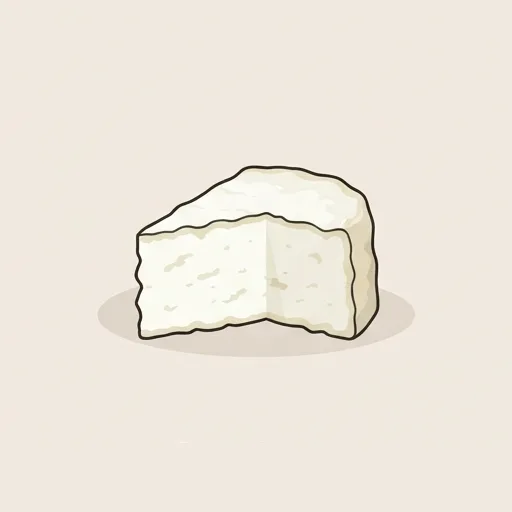
What it is
Goat cheese is cheese made from the milk of domestic goats, sold fresh or aged.
What it tastes like
On the nose: butter-fat, fruity, apple. Among its measured molecules: butyric acid, 2-ethylhexanol, 2,3-butanedione, acetoin, acetone.
What goes with it
- Olive oilboth carry butyric acid, butter-fatcite
- Sweet cherryboth carry acetone, fruitycite
- Cacaoboth carry 2,3-butanedionecite
Salt and acid
Salt
Salt not measured yet.
Acid
Acid not measured yet.
Unusual pairings
Pairs the library can cite that almost nobody makes.
- Goat cheese + Cheddar
both carry 2-ethylhexanol, fatty-floral fruital (16 of 338 carry it)
- Goat cheese + Yogurt
both carry butyric acid, butter-fat (23 of 338 carry it)
- Goat cheese + Milk
both carry 2-ethylhexanol, fatty-floral fruital (16 of 338 carry it)
Every one of its 15 compounds carries a paper the library can cite.
acetic acidaromaacidreads as pungent (PubChem)Measured in 35 of 338 ingredients.cite
0.12 ± 0.00 mg/kg at Day 1, rising to 8.44 ± 0.02 mg/kg by Day 120 — Ferrara et al. 2026, Sensors (Basel, Switzerland) (Table 1, Carboxylic acids block, row 'Acetic acid', Day1 column)acetoinaromaketonereads as buttery odor (PubChem)Measured in 16 of 338 ingredients.cite
0.65 ± 0.04 mg/kg at Day 1 (freshest sample) -- the largest single compound in the fresh cheese, rising to 1.82 ± 0.02 mg/kg by Day 90 before falling back to 0.48 by Day 150 — Ferrara et al. 2026, Sensors (Basel, Switzerland) (Table 1, Ketones block, row '3-Hydroxy-2-butanone (Acetoin)', Day1 column)acetonearomaketonereads as fruity odor (PubChem)Measured in 17 of 338 ingredients.cite
0.06 ± 0.01 mg/kg at Day 1 — Ferrara et al. 2026, Sensors (Basel, Switzerland) (Table 1, Ketones block, row '2-Propanone', Day1 column)butyric acidaromaacidreads as butter-fat taste (PubChem)Measured in 7 of 338 ingredients.cite
0.03 ± 0.00 mg/kg at Day 1, rising to 11.11 ± 0.03 mg/kg by Day 120 — Ferrara et al. 2026, Sensors (Basel, Switzerland) (Table 1, Carboxylic acids block, row 'Butanoic acid', Day1 column)caprylic acidaromaacidreads as slight odor (PubChem)Measured in 21 of 338 ingredients.cite
0.07 ± 0.00 mg/kg at Day 1, rising to 5.94 ± 0.02 mg/kg by Day 120 — Ferrara et al. 2026, Sensors (Basel, Switzerland) (Table 1, Carboxylic acids block, row 'Octanoic acid', Day1 column)2,3-butanedionearomaketonereads as strong odor (PubChem)Measured in 15 of 338 ingredients.cite
0.08 ± 0.00 mg/kg at Day 1, peaking at 0.36 ± 0.02 mg/kg at Day 90 before falling — Ferrara et al. 2026, Sensors (Basel, Switzerland) (Table 1, Ketones block, row '2,3-Butanedione (diacetyl)', Day1 column)ethanolaromaalcoholreads as burning (PubChem)Measured in 19 of 338 ingredients.cite
0.21 ± 0.01 mg/kg at Day 1, rising to 19.80 ± 0.09 mg/kg by Day 120 then falling to 3.71 by Day 150 — Ferrara et al. 2026, Sensors (Basel, Switzerland) (Table 1, Alcohols block, row 'Ethanol', Day1 column)phenylacetaldehydearomaaldehydeMeasured in 21 of 338 ingredients.cite
0.03 ± 0.00 mg/kg at Day 1, rising to 0.29 ± 0.00 mg/kg by Day 120 — Ferrara et al. 2026, Sensors (Basel, Switzerland) (Table 1, Aldehydes block, row 'Phenylacetaldehyde (Benzenacetaldehyde)', Day1 column)phenylethyl alcoholaromaalcoholreads as sharp burning taste (PubChem)Measured in 41 of 338 ingredients.cite
0.03 ± 0.00 mg/kg at Day 1, rising to 0.89 ± 0.07 mg/kg by Day 120 — Ferrara et al. 2026, Sensors (Basel, Switzerland) (Table 1, Alcohols block, row 'Phenethyl alcohol', Day1 column)alpha-pinenearomaterpenoidreads as odor of turpentine (PubChem)Measured in 71 of 338 ingredients.cite
0.03 ± 0.00 mg/kg at Day 1, rising to 0.24 ± 0.02 mg/kg by Day 120 -- likely forage-derived, present at a small, ripening-correlated concentration rather than a dominant background reading — Ferrara et al. 2026, Sensors (Basel, Switzerland) (Table 1, Terpenes block, row 'α-Pinene', Day1 column)2-ethylhexanolaromaalcoholreads as sweet, fatty-floral taste with fruital note (PubChem)Measured in 9 of 338 ingredients.cite
0.03 ± 0.00 mg/kg at Day 1, rising to 0.24 ± 0.01 mg/kg by Day 120 — Ferrara et al. 2026, Sensors (Basel, Switzerland) (Table 1, Alcohols block, row '2-Ethyl-1-hexanol', Day1 column)ethyl acetatearomaesterreads as fragrant odor (PubChem)Measured in 42 of 338 ingredients.cite
0.04 ± 0.00 mg/kg at Day 1, rising to 0.48 ± 0.01 mg/kg by Day 120 — Ferrara et al. 2026, Sensors (Basel, Switzerland) (Table 1, Esters block, row 'Ethyl acetate', Day1 column)hexanoic acidaromaacidMeasured in 24 of 338 ingredients.cite
0.17 ± 0.02 mg/kg at Day 1, rising roughly 120-fold to 20.10 ± 0.41 mg/kg by Day 120 -- the largest concentration reached by any compound in the whole series — Ferrara et al. 2026, Sensors (Basel, Switzerland) (Table 1, Carboxylic acids block, row 'Hexanoic acid', Day1 column)3-methylbutanalaromaaldehydereads as apple-like odor (PubChem)Measured in 22 of 338 ingredients.cite
0.25 ± 0.02 mg/kg at Day 1, staying in the same 0.13-0.29 mg/kg range through the whole 150-day series -- one of the few compounds that does not climb with ripening — Ferrara et al. 2026, Sensors (Basel, Switzerland) (Table 1, Aldehydes block, row '3-Methylbutanal', Day1 column)isoamyl alcoholaromaalcoholMeasured in 43 of 338 ingredients.cite
0.40 ± 0.01 mg/kg at Day 1, rising to 2.17 ± 0.03 mg/kg by Day 120 — Ferrara et al. 2026, Sensors (Basel, Switzerland) (Table 1, Alcohols block, row '1-Butanol-3-methyl (Isoamyl alcohol)', Day1 column)
Sources
- Ferrara et al. 2026, Sensors (Basel, Switzerland)