Galangal
Spice & roots· spice
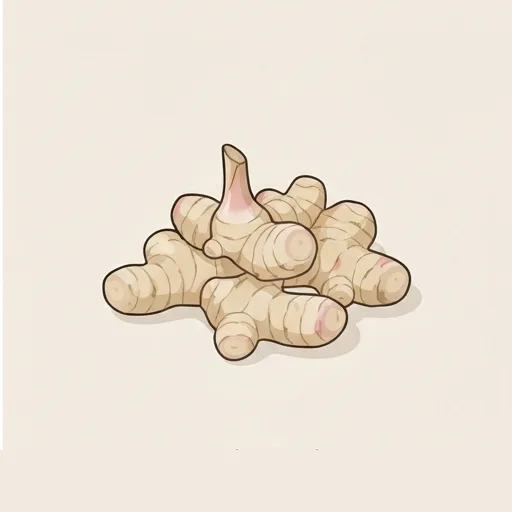
What it is
Galangal is the rhizome of Alpinia galanga or related plants, used fresh or dried in Southeast Asian cooking.
What it tastes like
On the nose: fruity, potato, camphor, cloves. Among its measured molecules: 4-propylphenol, galangal acetate, 4-Allylphenyl acetate, trans-2-acetoxy-1,8-cineole, γ-octalactone.
What goes with it
- Nigellaboth carry valeric acid, fruitycite
- Peppermintboth carry 1,8-cineole, camphorcite
- Wormwoodboth carry 1,8-cineole, camphorcite
Salt and acid
Salt
Salt not measured yet.
Acid
Acid not measured yet.
Unusual pairings
Pairs the library can cite that almost nobody makes.
- Galangal + Ginger
both carry 1,8-cineole, camphor (43 of 338 carry it)
- Galangal + Shiso
both carry 1,8-cineole, camphor (43 of 338 carry it)
- Galangal + Lavender
both carry 1,8-cineole, camphor (43 of 338 carry it)
17 of 177 compounds on file carry a paper the library can cite.
acetic acidaromaacidreads as pungent (PubChem)Measured in 35 of 338 ingredients.cite
flavour dilution factor 256 in the rhizome's aroma extract dilution analysis; no concentration published. — Shi et al. 2025, Journal of Agricultural and Food Chemistry (Table 1, compound 8)Measurement only — the source text is licensed facts-only.vanillinaromaphenolreads as sweetish smell (PubChem)Measured in 12 of 338 ingredients.cite
flavour dilution factor 128 in the rhizome's aroma extract dilution analysis; no concentration published. — Shi et al. 2025, Journal of Agricultural and Food Chemistry (Table 1, compound 43 — the last-eluting odorant in the analysis)Measurement only — the source text is licensed facts-only.1,8-cineolearomaterpenoidreads as camphor-like odor (PubChem)Measured in 38 of 338 ingredients.cite
530,000 µg/kg of the rhizome against an odour threshold of 4.0 µg/kg, giving an odour activity value of 130,000 — the highest OAV in the study. Its flavour dilution factor in the same paper's dilution analysis is 4096, the joint highest of any odorant found. — Shi et al. 2025, Journal of Agricultural and Food Chemistry (Table 3 (Concentrations and OAVs of Major Odorants in A. galanga Rhizome), row 3; and Table 1 (Odorants in the Volatile Isolate Obtained from A. galanga Rhizome), compound 3)Measurement only — the source text is licensed facts-only.eugenolaromaphenolreads as odor of cloves (PubChem)Measured in 19 of 338 ingredients.cite
2950 µg/kg of the rhizome against an odour threshold of 1.8 µg/kg, giving an odour activity value of 1600 — and a flavour dilution factor of 4096, the joint highest in the study alongside 1,8-cineole and galangal acetate, on a thousandth of galangal acetate's concentration. — Shi et al. 2025, Journal of Agricultural and Food Chemistry (Table 3, row 36; and Table 1, compound 36)Measurement only — the source text is licensed facts-only.γ-octalactonearomaetherMeasured in 2 of 338 ingredients.cite
flavour dilution factor 64 in the rhizome's aroma extract dilution analysis; no concentration published. — Shi et al. 2025, Journal of Agricultural and Food Chemistry (Table 1, compound 26)Measurement only — the source text is licensed facts-only.valeric acidaromaacidreads as fruity taste (PubChem)Measured in 6 of 338 ingredients.cite
flavour dilution factor 128 in the rhizome's aroma extract dilution analysis; no concentration published. — Shi et al. 2025, Journal of Agricultural and Food Chemistry (Table 1, compound 21)Measurement only — the source text is licensed facts-only.terpinen-4-olaromaalcoholreads as pine (PubChem)Measured in 41 of 338 ingredients.cite
flavour dilution factor 64 in the rhizome's aroma extract dilution analysis, with an enantiomeric distribution of 62/38 R to S — the only one of the four chiral odorants the paper resolved that is close to racemic. No concentration published. — Shi et al. 2025, Journal of Agricultural and Food Chemistry (Table 1, compound 14; and Table 2, row 14)Measurement only — the source text is licensed facts-only.4-propylphenolaromahydrocarbonMeasured in 1 of 338 ingredients.cite
flavour dilution factor 64 in the rhizome's aroma extract dilution analysis; no concentration published. — Shi et al. 2025, Journal of Agricultural and Food Chemistry (Table 1, compound 38)Measurement only — the source text is licensed facts-only.methionalaromasulfur compoundreads as cooked potato (PubChem)Measured in 9 of 338 ingredients.cite
flavour dilution factor 128 in the rhizome's aroma extract dilution analysis; no concentration published. A Strecker aldehyde of methionine, and the same odorant this sweep's lychee and beef-tallow nodes both carry. — Shi et al. 2025, Journal of Agricultural and Food Chemistry (Table 1, compound 9)Measurement only — the source text is licensed facts-only.myrcenearomaterpenoidreads as pleasant (PubChem)Measured in 68 of 338 ingredients.cite
9630 µg/kg of the rhizome against an odour threshold of 1.2 µg/kg, giving an odour activity value of 8000 — third-highest OAV in the study on about a fiftieth of 1,8-cineole's concentration. Flavour dilution factor 64. — Shi et al. 2025, Journal of Agricultural and Food Chemistry (Table 3, row 2; and Table 1, compound 2)Measurement only — the source text is licensed facts-only.galangal acetatearomaMeasured in 1 of 338 ingredients.cite
4,210,000 µg/kg of the rhizome as the (S)-enantiomer, against an odour threshold of 96 µg/kg, giving an odour activity value of 44,000 — the largest concentration of any odorant measured, and about eight times the next-largest. Flavour dilution factor 4096, the joint highest in the study. The enantiomeric distribution is 4/96 R to S, so the rhizome makes essentially one hand of this molecule. — Shi et al. 2025, Journal of Agricultural and Food Chemistry (Table 3, row 41b '(S)-galangal acetate'; Table 1, compound 41; and Table 2 (Enantiomeric Distribution of Important Chiral Odorants in A. galanga Rhizome), row 41)Measurement only — the source text is licensed facts-only.4-Allylphenyl acetatearomaphenolMeasured in 1 of 338 ingredients.cite
127,000 µg/kg of the rhizome against an odour threshold of 130 µg/kg, giving an odour activity value of 980; flavour dilution factor 256. — Shi et al. 2025, Journal of Agricultural and Food Chemistry (Table 3, row 27; and Table 1, compound 27)Measurement only — the source text is licensed facts-only.(3Z)-3-hexenalaromaaldehydeMeasured in 7 of 338 ingredients.cite
flavour dilution factor 64 in the rhizome's aroma extract dilution analysis; no concentration published. — Shi et al. 2025, Journal of Agricultural and Food Chemistry (Table 1, compound 1 — the first-eluting odorant in the analysis)Measurement only — the source text is licensed facts-only.germacrene BaromaterpenoidMeasured in 3 of 338 ingredients.cite
62,700 µg/kg of the rhizome against an odour threshold of 27 µg/kg, giving an odour activity value of 2300; flavour dilution factor 32. — Shi et al. 2025, Journal of Agricultural and Food Chemistry (Table 3, row 24; and Table 1, compound 24)Measurement only — the source text is licensed facts-only.Cinnamyl acetatearomaesterMeasured in 3 of 338 ingredients.cite
flavour dilution factor 64 in the rhizome's aroma extract dilution analysis; no concentration published. — Shi et al. 2025, Journal of Agricultural and Food Chemistry (Table 1, compound 35)Measurement only — the source text is licensed facts-only.trans-2-acetoxy-1,8-cineolearomaMeasured in 1 of 338 ingredients.cite
flavour dilution factor 128 in the rhizome's aroma extract dilution analysis; no concentration published. An acetylated cineole — the same acetate chemistry that gives this rhizome its marker compound. — Shi et al. 2025, Journal of Agricultural and Food Chemistry (Table 1, compound 20)Measurement only — the source text is licensed facts-only.
On file, no cited source yet ✳
These molecules are on record for it from the library's earlier sources. We are buying and requesting the papers; each one that lands moves its molecule up into the cited list.
- β-bisaboleneterpenoid
- 2-hydroxy-4-(prop-2-en-1-yl)phenyl acetateacid
- (1Z,4Z)-1,5-Bis(4-hydroxyphenyl)-1,4-pentadienehydrocarbon
- (2E)-2-[2-[(1R,2R,4aS,8aS)-5,5,8a-trimethylspiro[3,4,4a,6,7,8-hexahydro-1H-naphthalene-2,2'-oxirane]-1-yl]ethylidene]butanedialterpenoid
- beta-farneseneterpenoid
- Labda-8(17),12-diene-15,16-dialterpenoid
- galanolactonelactone
- 4-hydroxy cinnamyl alcohol diacetateester
- (+)-endo-2-acetoxy-1,8-cineoleterpenoid
- Galanganal
- (1S,2R)-1-(4-hydroxyphenyl)-2-[(E)-3-(4-hydroxyphenyl)prop-2-enyl]propane-1,3-diol
- (1S,2S)-1-(4-hydroxyphenyl)-2-[(E)-3-(4-hydroxyphenyl)prop-2-enyl]propane-1,3-diol
- terpinoleneterpenoidreads as terpene taste (PubChem)
- octadecaneacidreads as fuel-like (PubChem)
- 1'-acetoxychavicol acetateester
- L-lysineacid
- beta-sesquiphellandreneterpenoid
- tridecaneacidreads as hydrocarbon odor (PubChem)
- tetradecaneacid
- pentadecaneacid
- 4-hydroxybenzaldehydephenol
- coniferyl acetatephenol
- L-aspartic acidacidreads as sour (PubChem)
- D-aspartic acidacid
- trans-coumaryl acetatephenol
- caryophylene oxideterpenoid
- L-prolineacidreads as sweet (PubChem)
- beta-pineneterpenoidreads as terpene odor (PubChem)
- (6E)-2,6-dimethyl-10-methylidenedodeca-2,6-dieneacid
- (4alpha)-1beta,3,3-Trimethyl-2-oxabicyclo[2.2.2]octane-6beta-ol acetateterpenoid
- (4alpha)-1beta,3,3-Trimethyl-2-oxabicyclo[2.2.2]octane-5alpha-ol acetateterpenoid
- (4alpha)-1beta,3,3-Trimethyl-2-oxabicyclo[2.2.2]octane-5beta-ol acetateterpenoid
- neryl acetateterpenoid
- geranyl acetateterpenoidreads as odor of lavender (PubChem)
- 4-[(E)-3-[(2R,3S,5R)-5-[(R)-hydroxy-(4-hydroxyphenyl)methyl]-2-(4-hydroxyphenyl)oxan-3-yl]prop-1-enyl]phenol
- [4-[5-(4-Acetyloxyphenyl)penta-1,4-dienyl]phenyl] acetateacid
- (1R,2R)-1-(4-hydroxyphenyl)-2-[(E)-3-(4-hydroxyphenyl)prop-2-enyl]propane-1,3-diol
- (2E)-2-[2-[(1S,4aS,8aR)-5,5,8a-trimethyl-2-methylidene-3,4,4a,6,7,8-hexahydro-1H-naphthalen-1-yl]ethylidene]butanedialterpenoid
- (1R,2S)-1-(4-hydroxyphenyl)-2-[(E)-3-(4-hydroxyphenyl)prop-2-enyl]propane-1,3-diol
- 4-[(E)-3-[(2S,3S,5S)-5-[(R)-hydroxy-(4-hydroxyphenyl)methyl]-2-(4-hydroxyphenyl)oxan-3-yl]prop-1-enyl]phenol
- L-lysineacid
- alpha-terpineolalcoholreads as floral, lilac (PubChem)
- β-caryophyllene oxideether
- beta-ocimeneterpenoid
- sabineneterpenoid
- 4-[(1S)-1-hydroxyprop-2-en-1-yl]phenyl acetateacid
- (8S,E)-8,20-Epoxylabd-12-ene-15,16-dialterpenoid
- limoneneterpenoidreads as pleasant lemon-like (PubChem)
- L-arginineacid
- lavandulyl acetateterpenoid
- Galanal Aalcohol
- Galanal Bterpenoid
- butyl acetateesterreads as sweet (PubChem)
- L-glutamic acidacidreads as umami sour taste (PubChem)
- (1S)-1-[4-(acetyloxy)phenyl]propyl acetate
- 3-(4-hydroxyphenyl)prop-2-enalaldehyde
- D-limoneneterpenoidreads as citrus odor (PubChem)
- (-)-beta-pineneterpenoid
- (-)-alpha-pineneterpenoid
- (+)-1'-acetoxychavicol acetate
- (-)-α-phellandreneterpenoid
- L-glutamic acidacid
- 1'-acetoxyeugenol acetateester
- Chavicol O-beta-glucopyranosidesugar
- L-aspartic acidacid
- 4-(2-propenyl)phenyl-β-D-glucopyranosideacid
- (E)-cinnamic acidacid
- (2S,4R)-1,7,7-trimethylbicyclo[2.2.1]heptan-2-olterpenoid
- 1'-Acetoxyeugenol acetateacid
- 4-[(1R)-1-Hydroxyprop-2-en-1-yl]phenolacid
- 6-methyleugenolacid
- (2S,3R,4S,5S,6R)-2-(hydroxymethyl)-6-(4-prop-2-enylphenoxy)oxane-3,4,5-triolacid
- delta-cadinolterpenoid
- spathulenolterpenoid
- p-coumaryl alcoholalcohol
- (2E,6E)-farnesalterpenoid
- caryophylleneterpenoid
- humuleneterpenoid
- beta-ocimeneterpenoid
- galanginflavonoid
- kaempferideflavonoid
- (2E)-3-(4-methoxyphenyl)prop-2-en-1-olacid
- bisdemethoxycurcuminphenol
- (2E)-2-[2-[(1R,2S,8aS)-5,5,8a-trimethylspiro[3,4,4a,6,7,8-hexahydro-1H-naphthalene-2,2'-oxirane]-1-yl]ethylidene]butanedialterpenoid
- cis-β-Ocimeneterpenoid
- 3-(4-Hydroxyphenyl)prop-2-en-1-yl acetateacid
- desmethoxycurcuminphenol
- zerumboneterpenoid
- L-alanineacidreads as sweet taste (PubChem)
- L-serineacidreads as sweet (PubChem)
- L-lysineacidreads as sweet/bitter (PubChem)
- L-tyrosineacid
- L-leucineacid
- 3-(4-Acetyloxy-3-methoxyphenyl)prop-2-enyl acetateacid
- L-methionineacidreads as faint (PubChem)
- L-histidineacidreads as sweet (PubChem)
- L-valineacid
- L-threonineacid
- tryptophanacidreads as flat taste (PubChem)
- L-isoleucineacidreads as bitter (PubChem)
- L-arginineacid
- 4-hydroxycinnamaldehydealdehyde
- bornyl acetateterpenoid
- trans-coniferyl alcohol diacetateester
- linaloolalcoholreads as spicy, citrus taste (PubChem)
- campheneterpenoidreads as camphor-like (PubChem)
- alpha-pineneterpenoidreads as odor of turpentine (PubChem)
- (R)-beta-bisaboleneterpenoid
- chavicolphenol
- L-serineacid
- D-phenylalanineacid
- tryptophanacid
- L-tyrosineacid
- phenyl-Alanineacid
- L-histidineacid
- L-valineacid
- L-threonineacid
- L-prolineacid
- thymolphenolreads as aromatic odor (PubChem)
- L-methionineacid
- D-methionineacid
- L-isoleucineacid
- L-leucineacid
- D-Alanineacid
- methyl eugenolacidreads as bitter, burning taste (PubChem)
- eugenol acetatephenol
- CID 71550939terpenoid
- D-phenylalanineacid
- 4-(1-hydroxyprop-2-en-1-yl)phenyl acetatephenol
- L-lysineacid
- 5-(4-Hydroxyphenyl)-2-[(4-hydroxyphenyl)methylidene]pent-4-enal
- L-alanineacid
- D-Alanineacid
- carveolterpenoid
- γ‑terpineneterpenoid
- α-terpineneterpenoid
- p-cymeneterpenoidreads as mild pleasant odor (PubChem)
- glycineacidreads as sweet (PubChem)
- 3-[2-(5,5,8a-trimethyl-2-methylidene-3,4,4a,6,7,8-hexahydro-1H-naphthalen-1-yl)ethylidene]-4-hydroxyoxolan-2-oneterpenoid
- 3,7-dimethyl-2,6-octadien-1-yl acetateterpenoid
- isobutyl acetateesterreads as banana taste (PubChem)
- phenyl-Alanineacid
- D-aspartic acidacid
- D-methionineacid
- 3-[4-(acetyloxy)phenyl]prop-2-en-1-yl acetateacid
- alpha-bergamoteneterpenoid
- citralterpenoid
- L-valineacid
- L-glutamic acidacid
- citronellyl acetateterpenoid
- (1R,2S,7S,8S)-1,3-dimethyl-8-propan-2-yltricyclo[4.4.0.02,7]dec-3-eneterpenoid
- curcumeneterpenoid
- alpha-santaleneterpenoid
- trans-carveolterpenoid
- 4-hydroxycinnamyl alcoholacid
- Farnesyl acetateterpenoid
- 3-(4-methoxyphenyl)prop-2-en-1-olacid
- curcuminphenol
- CID 9905088terpenoid
- 3-[(1E)-2-[(1S,4aS,8aS)-5,5,8a-trimethyl-2-methylidene-hexahydro-1H-naphthalen-1-yl]ethenyl]furanterpenoid
Sources
- Shi et al. 2025, Journal of Agricultural and Food Chemistry(facts-only licence)