Flavor← the wheel
Ancho chile
Spice & roots· spice
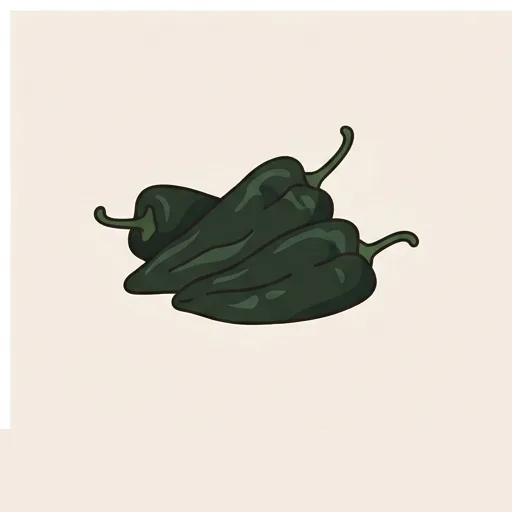
What it is
Ancho chile is a dried, fully ripened poblano pepper, one of the most widely used dried chiles in Mexican cooking.
Salt and acid
Salt
Salt not measured yet.
Acid
Acid not measured yet.
Every one of its 4 compounds carries a paper the library can cite.
dihydrocapsaicintastenitrogen compoundMeasured in 6 of 338 ingredients.cite
0.77 ± 0.04 mg per gram dry weight, 41% of the cultivar's total capsaicinoids — the largest single capsaicinoid in ancho under ordinary field conditions, and the paper notes dihydrocapsaicin is the major component at 41-57% of the total in almost all the varieties it measured — González-Zamora et al. 2013, Molecules (Table 1 (Content of capsaicinoids in chili samples grown in an environment without thermal stress), row 'Ancho cv. Don Matias', DHC column)nordihydrocapsaicintastephenolMeasured in 3 of 338 ingredients.cite
0.25 ± 0.01 mg/g dry weight, 13% of the cultivar's total capsaicinoids. Quantified as dihydrocapsaicin equivalents per the paper's footnote. — González-Zamora et al. 2013, Molecules (Table 1, row 'Ancho cv. Don Matias', n-DHC column)capsaicintastenitrogen compoundreads as highly volatile with a pungent odor (PubChem)Measured in 6 of 338 ingredients.cite
0.29 ± 0.03 mg/g dry weight, 15% of the cultivar's total capsaicinoids, with a capsaicin to dihydrocapsaicin ratio of 1:2.7. That is the second-lowest capsaicin concentration of the seven pungent cultivars measured, above only Guajillo's 0.17, and a fifty-third of Chiltepín's 15.36 mg/g in the same table. — González-Zamora et al. 2013, Molecules (Table 1, row 'Ancho cv. Don Matias', C column and C:DHC ratio column)homodihydrocapsaicintastephenolMeasured in 2 of 338 ingredients.cite
0.58 ± 0.12 mg/g dry weight, 31% of total capsaicinoids — an unusually large share for this minor capsaicinoid, which in most of the other seven cultivars sits between 2% and 14%. Quantified as dihydrocapsaicin equivalents per the paper's own footnote, so it is semi-quantified against a surrogate standard. — González-Zamora et al. 2013, Molecules (Table 1, row 'Ancho cv. Don Matias', h-DHC column)
Sources
- González-Zamora et al. 2013, Molecules